Company Biography

CP19 - Simple Targeted Encounters to Better Control Diabetes - Bringing Care to the Patient - a Pharmacy Pilot Project
Poster Type: Innovation
Primary Funding Source: BD Helping Build Healthy Communities
Category: Expanding Access to Care and Other Services
Issue or Challenge: Clinical pharmacists manage chronic diseases in many healthcare settings utilizing face-to-face encounters or telemedicine. Underserved patients deal with a unique set of constraints: physical barriers (transportation, time off from work), low literacy, inconsistent technology access, and language and cultural differences.
Diabetic patients often miss their numerous medical appointments (doctor, labs, specialists) for these reasons, but most will pick up medications at the pharmacy. The pharmacy is positioned ideally to fill this gap.
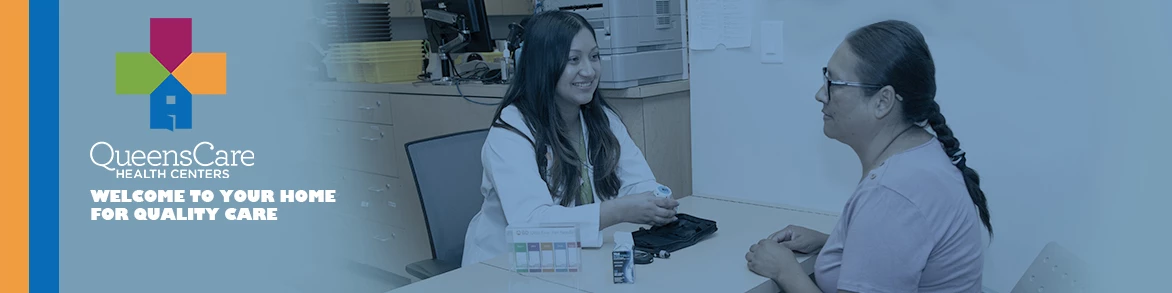
Our project takes elements of a successful clinical pharmacy program and transforms it into simple targeted encounters focusing on several areas of diabetes care to patients who pick up in the pharmacy.
Description of Innovation: QueensCare Health Centers is a federally qualified health center with five sites, two of which have a closed-door in-house pharmacy. Many patients are Spanish speaking (60-70%) and have poor literacy or poor health literacy. Our project developed simple targeted encounters to improve disease knowledge, address adherence and target care gaps.
Pharmacy staff (technicians, pharmacists) provided these interventions to diabetic patients picking up medications. There were three components: initial trigger, patient assessment, and encounter.
Triggers: We started with the first trigger, then expanded additional triggers:
- • Patients picking up any testing supplies (strips, lancets, glucometer)
- • Patients picking up any insulin prescription
- • Will Call* patients with an elevated A1c (last A1c = 10%)
- • Will Call* patients due for A1c (Last A1c = 4 months ago)
*Patients with medications ready but have not picked up yet
Assessment: 2-3 questions asked by pharmacy technician
Examples using first trigger (testing supplies):
- • Do you have problems checking your blood sugar regularly?
- • Do you know what your blood sugar goals are?
Encounter based on patient responses
Examples:
- • Review and demo of testing device and technique
No medication adjustments were made. All encounters were incorporated into pharmacy workflow and documented in a HIPAA compliant app.
Impact or Result: Data for over 500 diabetic patients was tracked over 15 months. The average A1c improved from 9.3% to 8.3%. At baseline, less than half of patients had A1c’s less than 9%. This increased to ~2/3.
Approximately 2/3 of patients picking up testing supplies reported they did NOT know their blood sugar goals and 1/3 could NOT use their glucometer correctly. Blood sugar goals were reviewed with patients and colorful stickers with their goals were provided in English and Spanish. In-depth, hands on glucometer training was provided and the patient must demonstrate successful technique before leaving.
Slightly more than half of patients picking up insulin prescriptions admitted they skip injections. The pharmacist provided individual consultation addressing the patient’s reason for missing injections.
We also developed a process to cross reference will call patients (medications ready but not picked up yet) with clinical databases to address overdue A1c labs.
Replicating this Innovation: Other pharmacies (retail, independent) can easily replicate our program. The program consists of simple encounters to address common barriers to diabetes control (competent self-monitoring, medication adherence and timely labs). Program encounters do not include high risk interventions such as prescribing new medications or dose adjustments. Community health center support staff such as nurses or community health workers can also provide similar interventions. Our program increases access to care and data show improved clinical outcomes. Our interim results have already been shared at a California Right Meds Collaborative training. And we will also present our project at the annual American Public Health Association meeting this fall.
Cecilia Wu, PharmD, Clinical Pharmacist, QueensCare Health Centers
Contact Information
Team Members

Cecilia Wu
QueensCare Health Centers
Clinical Pharmacist
